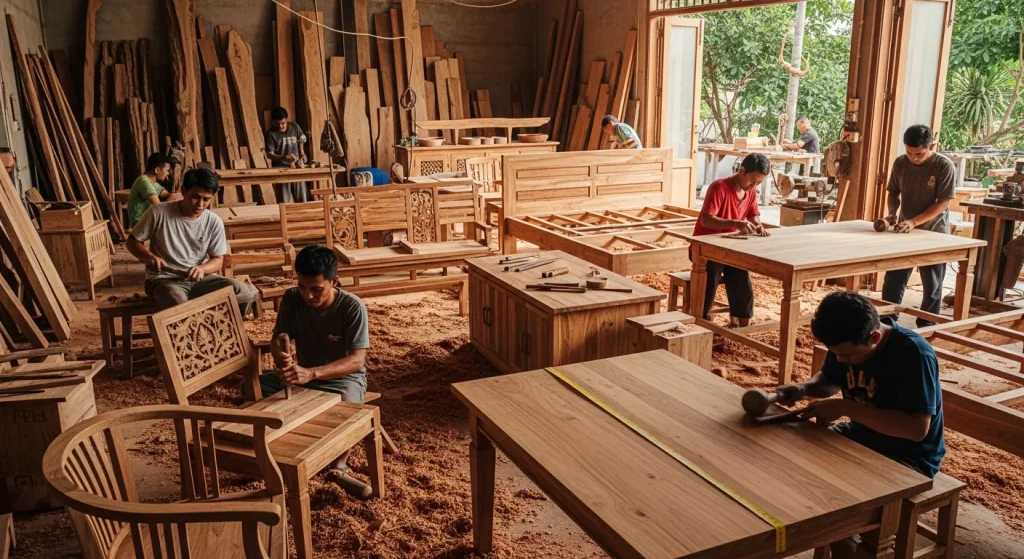
The Bali teak furniture market is experiencing steady growth through 2027, propelled by increasing tourism, hospitality sector projects, and sustained global demand for durable outdoor furnishings. Bali operates as a significant craft and export centre within Indonesia’s broader teak and wooden furniture industry, supplying a wide range of products to international trade buyers.
How to Avoid Chemical-Smelling, Musty Teak in Bali: A 2027 Buyer’s Warning and Inspection Guide
As a B2B buyer of Bali teak living room furniture or other teak products, understanding the nuances of material quality and finishing processes is crucial. The presence of chemical odours or mustiness in teak furniture indicates potential issues in curing, treatment, or storage, directly impacting product longevity and market appeal. This guide outlines key inspection protocols for 2027, ensuring your wholesale purchases meet expected standards.
Understanding the Teak Furniture Market in 2027
The global teak furniture market continues its steady expansion, with compound annual growth rates (CAGR) projected around 4-6% through the early 2030s. Estimates place the market value between approximately USD 3.8 billion and USD 8.5 billion, depending on the specific definition and year of assessment. Asia-Pacific consistently leads as both a production and consumption hub. Indonesia, a major global teak producer, benefits significantly from this growth, with Bali serving as a prominent export and manufacturing centre.
The broader Asia-Pacific wooden furniture market, encompassing all timber species, was valued at USD 166 billion in 2025 and is expected to reach USD 287.4 billion by 2035, growing at a 5.7% CAGR. Indoor wooden furniture holds a dominant share within this, accounting for 78.4% or USD 130.2 billion in 2025. Solid wood furniture, a category where teak features prominently, also sees Asia-Pacific leading with over 45% global market share. These figures underscore the continued importance of sourcing high-quality teak from regions like Bali.
2027 Note on Sourcing
For 2027, buyers should anticipate continued strong demand for certified teak, especially for outdoor and high-end living room furniture. Verifying supplier adherence to sustainable forestry practices and proper wood treatment protocols will be increasingly important for compliance and market positioning. Expect prices for small teak items to range from USD 50–150 and premium sets from USD 500–2,000+, subject to design and certification status.
Identifying and Avoiding Chemical Odours in Teak
Chemical smells in teak furniture often originate from improper finishing applications, unsuitable glues, or inadequate drying of chemical treatments. These odours are not characteristic of natural teak and signal a potential compromise in the product’s integrity or safety.
Common Sources of Chemical Smells:
- Volatile Organic Compounds (VOCs) from finishes: Certain varnishes, sealants, or stains contain VOCs that off-gas, producing strong chemical smells. High-quality teak typically requires minimal finishing due to its natural oils, so strong odours from finishes can be a red flag.
- Adhesives: If furniture components are glued, the adhesives used might emit chemical fumes, especially if not fully cured.
- Improper cleaning agents: Sometimes, furniture is cleaned with harsh chemicals before shipping, leaving residual odours.
Inspection Protocols for Chemical Odours:
- Initial Scent Check: Upon receiving a sample or inspecting a batch, perform a direct scent check. The furniture should smell faintly of wood, not chemicals.
- Ventilation Test: Place the furniture in a well-ventilated area for 24-48 hours. If the chemical smell persists or reduces only slightly, the issue is likely inherent in the material or finish.
- Surface Residue Check: Wipe a small, inconspicuous area with a clean, damp cloth. Check for any discolouration on the cloth or a chemical residue on the furniture surface.
Addressing Mustiness in Teak Furniture
Musty smells indicate mould or mildew growth, typically caused by high moisture content during storage, transit, or inadequate drying of the timber. This not only produces an unpleasant odour but can also lead to wood degradation and compromise structural integrity over time.
Common Sources of Musty Smells:
- Insufficient Drying: Teak, like all timber, must be properly kiln-dried to a stable moisture content (typically 8-12% for furniture). If not, residual moisture can promote mould growth.
- Humid Storage Conditions: Storing furniture in damp, poorly ventilated warehouses or containers allows moisture to penetrate the wood fibres, leading to mustiness.
- Mould Contamination: Exposure to mould spores in the environment during production or shipping can lead to growth on the wood surface or within its pores.
Inspection Protocols for Mustiness:
- Visual Inspection: Look for any visible signs of mould or mildew, which can appear as black, green, or white fuzzy patches on the wood surface, especially in crevices or joints.
- Moisture Meter Reading: If possible, use a moisture meter to check the wood’s moisture content. Readings above 12% are a cause for concern.
- Surface Feel: Run your hand over the surface. Musty wood might feel slightly damp or have a chalky texture in affected areas.
- Packaging Examination: Inspect packaging for signs of water damage, condensation, or punctures that could have exposed the furniture to moisture.
Key Quality Control Measures for Buyers
To mitigate the risks of receiving chemically odorous or musty teak, implement robust quality control at the sourcing stage. This table summarises critical areas for focus:
| Aspect | Buyer Action | Red Flags |
|---|---|---|
| Wood Drying | Request kiln-drying certificates; verify moisture content (8-12%). | No certificates; moisture readings >12%; visible warping. |
| Finishing Materials | Specify low-VOC or natural oil finishes; request material safety data sheets (MSDS). | Strong chemical scent; sticky or uneven finish application. |
| Adhesives | Inquire about glue types used; specify formaldehyde-free options. | Pungent, acrid smell; visible glue squeeze-out. |
| Storage & Packaging | Verify dry, ventilated storage; specify moisture-resistant packaging. | Damp packaging; visible mould inside containers; water stains. |
| Supplier Reputation | Check references; review previous audit reports; visit factory if possible. | Lack of transparency; inconsistent product quality; poor communication. |
Partnering with Reputable Bali Teak Suppliers
Working with established and transparent suppliers in Bali is the most effective strategy for preventing quality issues. Reputable manufacturers adhere to international production standards, ensure proper timber treatment, and utilise appropriate finishing materials. They provide documentation for wood sourcing and treatment processes, offering assurance regarding product quality and sustainability.
For your wholesale Bali teak living room furniture requirements, ensure your supplier demonstrates a clear understanding of wood science and quality control. This proactive approach safeguards your investment and protects your brand reputation in the competitive global market.
Optimising Logistics and Shipping from Bali for Teak Furniture Importers
Efficient logistics and shipping are critical for importers of teak furniture from Bali. The island’s position as a major craft and export hub within Indonesia’s broader wooden furniture industry means established shipping routes are available. However, understanding the nuances of freight, customs, and local handling is essential to mitigate delays and control costs. Given the steady growth in demand for durable outdoor furniture and hospitality projects, optimising the supply chain from Bali is a competitive advantage.
Importers should focus on consolidating shipments where possible to maximise container utilisation. Careful consideration of packaging, particularly for premium sets ranging from USD 500–2,000+, is necessary to prevent damage during transit. For smaller items, priced roughly USD 50–150, combining multiple product lines from a single supplier or coordinating with a logistics partner for multi-vendor consolidation can yield efficiencies. Understanding the lead times from production to port departure, alongside transit times to destination markets, is key for inventory management and retail scheduling.
- Freight Options: Full Container Load (FCL) for large orders, Less than Container Load (LCL) for smaller volumes.
- Documentation: Ensure all export documentation, including Certificates of Origin and phytosanitary certificates, are accurate and complete.
- Port Infrastructure: Utilise primary Indonesian export ports with established international shipping lanes.
- Customs Clearance: Work with experienced customs brokers to navigate import regulations in destination countries.
- Packaging Standards: Specify robust, export-grade packaging suitable for sea freight and multiple handling points.
Teak Furniture Certification and Sustainability for 2027 Buyers
As global demand for teak furniture continues its mid-single-digit growth through 2027, driven by conscious consumers and corporate sustainability mandates, certification and sustainable sourcing are increasingly important. Buyers, including retailers and interior contractors, must ensure their teak imports from Bali comply with international standards for responsible forestry. This not only addresses ethical considerations but also often impacts market access and consumer preference, particularly in regions with strong environmental regulations.
Indonesia, as a major global producer of teak, offers various certification schemes. Importers should request documentation that verifies the legal and sustainable origin of the timber. This due diligence helps mitigate risks associated with illegal logging and ensures product integrity. For premium sets (USD 500–2,000+) and high-volume orders, certified teak can differentiate offerings in competitive markets, aligning with the growing trend towards sustainable procurement in tourism and hospitality projects.
| Certification Type | Description | Buyer Benefit |
|---|---|---|
| SVLK (Indonesian Legal Wood) | Mandatory Indonesian timber legality verification system. | Ensures legal origin and export compliance from Indonesia. |
| FSC (Forest Stewardship Council) | International standard for responsible forest management. | Demonstrates environmental and social responsibility, preferred by many global markets. |
| PEFC (Programme for the Endorsement of Forest Certification) | International umbrella organisation for national forest certification systems. | Alternative to FSC, verifying sustainable forest management practices. |
Buyers should confirm the specific certification applicable to their chosen supplier and product range. This ensures that the teak furniture, whether small items (USD 50–150) or large premium sets, meets the required sustainability benchmarks for their target markets and corporate policies.
For robust, high-quality teak furniture free from chemical odours and mustiness, request a wholesale quote on WhatsApp from Teak Furniture Bali. We supply importers, wholesalers, retailers, interior contractors, and trade buyers worldwide.