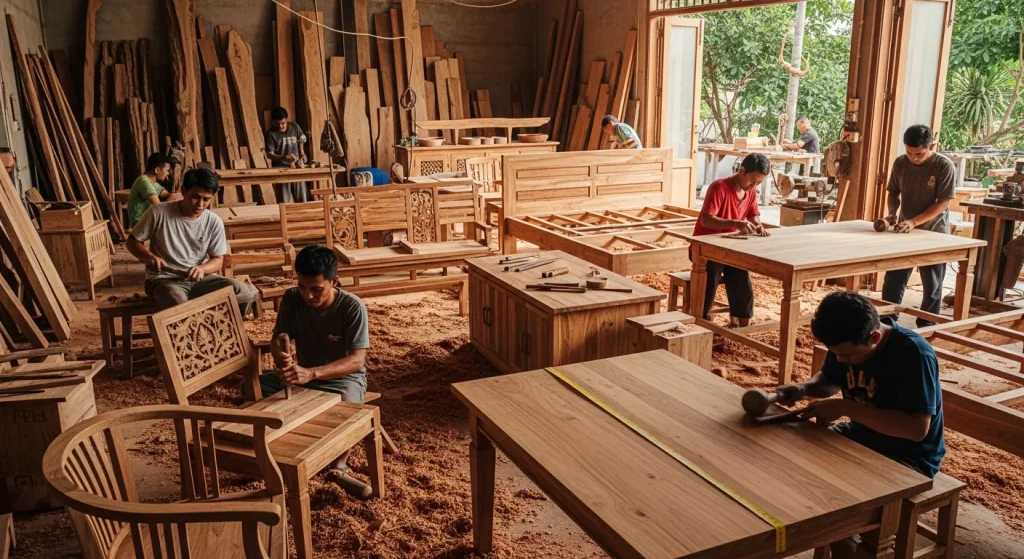
Verifying teak kiln-drying in Bali is crucial for foreign buyers to prevent issues like chemical odours. The global teak furniture market continues to grow, with Asia-Pacific, including Indonesia, being a key production and consumption hub. Understanding the kiln-drying process ensures product quality and compliance for wholesale procurement.
How to Verify Teak Kiln-Drying in Bali 2027: A Step-by-Step DIY Guide for Foreign Buyers to Stop Chemical-Smelling Slabs
The global demand for teak furniture is projected for steady growth, with the market expected to reach approximately USD 4.84 billion by 2034, registering a CAGR of 4.1% from 2025. Asia-Pacific consistently leads this market, both in production and consumption. Indonesia, and specifically Bali, serves as a significant hub for teak furniture manufacturing and export. As a wholesale buyer, ensuring the quality of your teak products, particularly regarding proper kiln-drying, is paramount. This guide provides a step-by-step approach to verify the kiln-drying process for your organic teak wood furniture orders in Bali.
Understanding the Importance of Kiln-Drying for Organic Teak Wood Furniture Bali
Kiln-drying is a critical step in preparing teak wood for furniture production. It reduces the wood’s moisture content to an optimal level, typically between 8% and 12% for furniture applications. This process stabilises the wood, preventing common issues such as warping, cracking, and shrinking after the furniture reaches its destination. Improperly dried teak can lead to product failure, customer complaints, and significant financial losses for importers and retailers. Furthermore, inadequate drying can sometimes be masked by chemical treatments, resulting in unpleasant odours that signal poor quality control and potential health concerns.
For organic teak wood furniture, the drying process must be controlled to maintain the wood’s natural integrity without introducing harmful chemicals. Our focus is on ensuring that the teak you procure has undergone a professional kiln-drying process, free from shortcuts that compromise quality or introduce unwanted chemical smells.
Pre-Shipment Verification Steps for Teak Kiln-Drying
Step 1: Request Documentation and Kiln Schedules
- Kiln-Drying Certificates: Reputable suppliers should provide certificates of kiln-drying from the facility. These certificates typically state the duration of the drying cycle, the maximum temperature reached, and the final moisture content.
- Kiln Schedules: Request the specific kiln schedules used for your batch of wood. This document details the temperature and humidity adjustments made throughout the drying process. Reviewing this allows you to ascertain if the drying cycle was appropriate for teak, which requires a slower, more controlled drying process than many other hardwoods to prevent internal stresses and defects.
- Supplier Transparency: A supplier’s willingness to provide this documentation is an initial indicator of their commitment to quality and transparency.
Step 2: On-Site Inspection of the Kiln Facility (If Possible)
For significant orders or long-term partnerships, an on-site visit to the kiln facility, or arranging for a third-party inspection, is advisable.
- Kiln Type: Observe the type of kilns used. Modern, computer-controlled kilns offer better precision in temperature and humidity management compared to older, manual systems.
- Loading and Stacking Practices: Proper stacking of lumber within the kiln is essential for even air circulation and drying. Look for uniform spacing between boards using stickers.
- Monitoring Equipment: Check for the presence of probes and sensors used to monitor temperature and humidity inside the kiln. Ask how frequently these are calibrated.
Step 3: Post-Drying Wood Inspection and Testing
Once the wood has been dried and is ready for manufacturing or shipment, conduct the following checks:
- Moisture Meter Readings: Use a high-quality pin or pinless moisture meter to take readings from multiple points on several boards from your batch. Readings should consistently fall within the 8-12% range. Be sure to test both surface and core moisture if using a pin meter with longer probes.
- Visual Inspection: Examine the wood for common drying defects such as checks (small cracks), splits, warps, and honeycombing (internal cracks). While minor surface checks can occur, extensive or deep defects indicate aggressive or improper drying.
- Smell Test: Properly kiln-dried teak should have a mild, pleasant woody aroma, characteristic of teak. Any strong chemical smell, acrid odour, or persistent dampness indicates an issue. This is a direct indicator of potential chemical treatments or inadequate drying.
- Weight Consistency: Within a batch, pieces of similar dimensions should have comparable weights. Significant weight discrepancies can suggest uneven drying.
Step 4: Request Sample Cuts for Internal Inspection
For critical verification, request a cross-section cut from a few sample boards. This allows for an internal inspection:
- Internal Checks/Honeycombing: Look for internal cracks or splits that may not be visible on the surface. These are typically caused by drying too quickly.
- Case Hardening Test: A simple test for case hardening involves cutting a small section from the end of a board and then cutting it into prongs. If the prongs curve inward, the wood is case-hardened, indicating uneven drying where the surface dried much faster than the core.
2027 Note: Evolving Standards and Technology
By 2027, expect an increased emphasis on sustainable forestry certifications and potentially more sophisticated, integrated digital tracking systems for wood processing. Suppliers who can provide real-time data on kiln conditions throughout the drying cycle, accessible via cloud platforms, will offer a higher level of transparency and assurance for wholesale buyers focused on organic teak wood furniture. Furthermore, the market will likely see more stringent regulations regarding chemical treatments, reinforcing the need for thorough odour and chemical residue checks.
Expected Market Dynamics for Organic Teak Wood Furniture Bali
The global teak furniture market is growing at mid-single-digit rates through 2027, driven by tourism, hospitality projects, and sustained global demand for durable outdoor furniture. Bali remains a significant craft and export hub within Indonesia’s wooden furniture industry. Prices for teak items range from approximately USD 50–150 for smaller pieces to USD 500–2,000+ for premium sets, depending on design and certification. This consistent demand reinforces the importance of reliable supply chains and verified quality control for wholesale buyers.
| Metric | Value Range (2025-2027) | Source |
|---|---|---|
| Global Teak Furniture Market Value | USD 3.8 – 8.5 billion | [2][3] |
| Global Teak Furniture CAGR (to early 2030s) | 4-6% | [2][3] |
| Bali Teak Item Prices (Small) | USD 50-150 | [1][2][3][4][6][10] |
| Bali Teak Item Prices (Premium Sets) | USD 500-2,000+ | [1][2][3][4][6][10] |
Conclusion for Importers and Wholesalers
Implementing these verification steps provides a robust framework for foreign buyers to ensure the quality and proper kiln-drying of teak wood from Bali. This due diligence mitigates risks associated with product defects, chemical odours, and ultimately protects your investment and reputation. Working with transparent and quality-focused suppliers is paramount in this process. By focusing on documentation, facility inspection, and meticulous wood testing, you can confidently procure organic teak wood furniture that meets international standards.
For wholesale inquiries regarding certified organic teak wood furniture and detailed quality control processes, request a wholesale quote on WhatsApp.