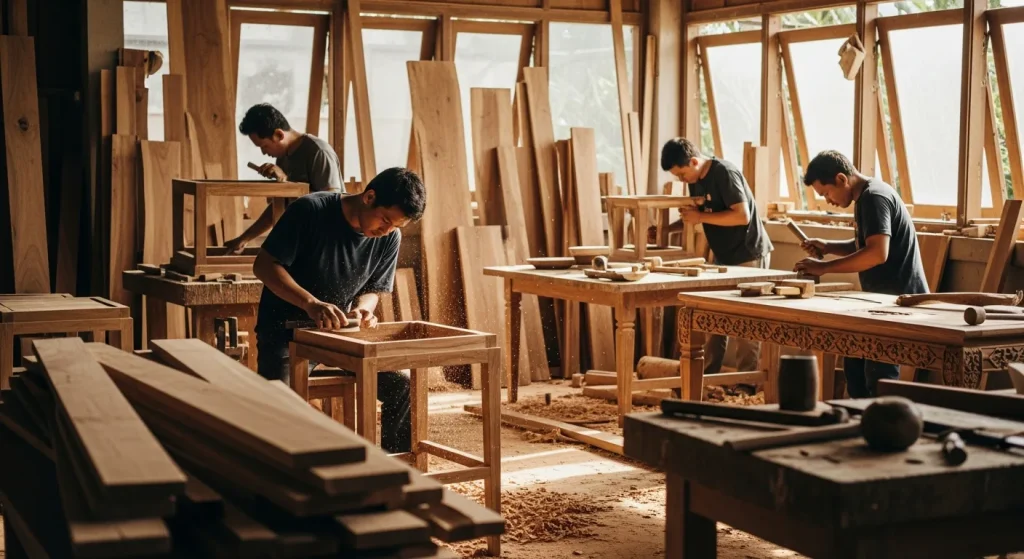
The teak furniture market is experiencing mid-single-digit growth through 2027, driven by global demand for durable outdoor solutions and significant tourism and hospitality sector projects. Bali, as a primary craft and export hub within Indonesia, plays a crucial role in meeting this demand, offering a wide range of teak products.
How to Ensure Perfect Teak Furniture Quality in Bali: A 2027 Step-by-Step Tutorial for Foreign Buyers
For importers, wholesalers, retailers, and interior contractors seeking to order teak furniture from Bali, understanding the quality assurance process is critical. This guide provides a detailed, step-by-step tutorial for navigating the procurement landscape in 2027, ensuring your investments yield superior products.
The global teak furniture market, valued at approximately USD 3.8–8.5 billion, is projected to grow at a Compound Annual Growth Rate (CAGR) of 4–6% into the early 2030s. Asia-Pacific consistently leads both production and consumption. Indonesia, a major global producer of teak, solidifies its position as a key supply base for teak furniture exports. Bali, specifically, is a significant contributor to Indonesia’s overall wooden furniture industry, which sees prices ranging from roughly USD 50–150 for small items to USD 500–2,000+ for premium sets, depending on design and certification.
Step 1: Understand Teak Grades and Sourcing
Teak wood quality is categorised into grades, primarily A, B, and C. These grades are determined by the wood’s heartwood content, grain density, and absence of knots or imperfections.
Teak Grades Explained:
- Grade A Teak: This is the highest quality, derived from the mature heartwood of fully grown teak trees (typically 20+ years old). It exhibits a uniform golden-brown colour, tight grain, and high oil content, providing exceptional durability and resistance to weathering. Grade A teak is free from knots, sapwood, and other defects.
- Grade B Teak: This grade includes wood from the outer heartwood and inner sapwood. It has a lighter colour, less consistent grain, and lower oil content than Grade A. Minor imperfections and small knots may be present. While still durable, it requires more maintenance than Grade A.
- Grade C Teak: This is the lowest quality, sourced from the outer layers of younger trees or from sapwood. It has an uneven colour, wider grain, and significantly lower oil content, making it less resistant to moisture and pests. Grade C teak often contains knots, streaks, and other cosmetic flaws. Its longevity is considerably less than Grade A or B.
Sourcing Verification:
When you order teak furniture from Bali, verify the source of the teak. Reputable suppliers utilise teak from government-regulated plantations, primarily Perum Perhutani in Java, Indonesia. This ensures sustainable harvesting practices and legal timber. Request documentation such as V-Legal (SVLK) certificates, which confirm timber legality and sustainability. This is not merely a formality; it directly impacts the long-term stability and ethical standing of your supply chain.
Step 2: Scrutinise Construction and Joinery
The integrity of teak furniture is largely dependent on its construction methods. Hand-crafted furniture, common in Bali, can vary significantly in quality.
Key Construction Elements:
- Joinery: Demand traditional joinery techniques such as mortise and tenon, dovetail, or dowel joints. These methods provide superior strength and longevity compared to screws or nails alone. Ensure joints are tight, precisely cut, and reinforced with waterproof epoxy or wood glue.
- Hardware: All metal hardware, including screws, bolts, and hinges, must be marine-grade stainless steel (304 or 316). This prevents rust and corrosion, especially for outdoor furniture exposed to varying climates.
- Thickness and Dimensions: Confirm that the teak planks and components meet specified thickness requirements. Thicker timber generally indicates higher durability and structural stability. Request detailed technical drawings with precise dimensions before production commences.
Step 3: Evaluate Finishing and Surface Treatment
The finish applied to teak furniture affects its aesthetic appeal, protection, and maintenance requirements.
Finishing Options:
- Natural/Unfinished: Many buyers prefer unfinished teak, allowing it to weather naturally to a silver-grey patina. This requires no initial treatment but will eventually change colour.
- Teak Oil: Regular application of teak oil enhances the wood’s natural golden hue and provides some UV protection. This is a maintenance-intensive option.
- Sealers/Protectors: Proprietary teak sealers or protectors can maintain the original colour for longer periods and offer enhanced resistance to stains and mildew. Clarify the type of sealer used and its durability claims.
Surface Quality Check:
Inspect the surface for smoothness, consistency, and absence of sanding marks, splinters, or rough patches. Edges should be smoothly rounded or chamfered, not sharp. Any finishing applied should be even, without drips, bubbles, or uneven absorption.
Step 4: Implement Robust Quality Control (QC) Protocols
Effective quality control is paramount when you order teak furniture from Bali. Do not rely solely on the supplier’s internal QC.
QC Best Practices:
- Pre-Production Inspection (PPI): Before manufacturing begins, inspect raw materials (teak planks) for grade, moisture content, and dimensions. This prevents costly issues later.
- During Production Inspection (DUPRO): Conduct periodic checks during the manufacturing process. Focus on joinery, assembly, and initial finishing stages. This allows for mid-course corrections.
- Final Random Inspection (FRI): A comprehensive inspection of a statistically significant sample of finished products before shipment. This covers dimensions, finish, construction, packaging, and quantity.
- Independent QC Agents: Consider engaging a third-party QC agency based in Bali. These agents provide unbiased reports and act as your eyes and ears on the ground, ensuring adherence to your specifications.
2027 Note: By 2027, expect an increased emphasis on digital verification for timber legality and supply chain traceability. Suppliers in Bali offering QR code-based tracking for individual furniture pieces, linking back to plantation origins and processing stages, will offer a competitive advantage and enhanced transparency for buyers.
Step 5: Packaging and Shipping Requirements
Proper packaging is essential to prevent damage during transit from Bali to your destination.
Packaging Specifications:
- Protection: Furniture should be wrapped in multiple layers of protective material, including foam sheets, corrugated cardboard, and plastic film. Edge protectors are mandatory for vulnerable corners.
- Crating: For larger or more delicate items, custom wooden crates provide superior protection. Ensure crates are sturdy, fumigated (ISPM 15 certified for international shipping), and clearly labelled.
- Container Loading: Oversee or request photographic evidence of container loading to ensure items are stacked securely, braced to prevent shifting, and properly inventoried.
Step 6: Establish Clear Communication and Contracts
Clear communication and legally sound contracts mitigate risks and ensure expectations are met.
Contractual Elements:
- Detailed Specifications: Your purchase order or contract must include precise specifications for wood grade, dimensions, finishes, hardware, construction methods, and packaging. Attach technical drawings and reference samples.
- Payment Terms: Agree on clear payment milestones linked to production stages (e.g., deposit, payment after DUPRO, final payment upon FRI and before shipment).
- Lead Times: Define realistic production and shipping lead times. Account for potential delays during peak seasons.
- Warranty and Returns: Outline terms for product defects, damages, and returns. Clarify responsibilities for freight and replacement costs.
By diligently following these steps, foreign buyers can confidently order teak furniture from Bali, securing high-quality products that meet international standards and satisfy discerning customers. The robust growth of the teak furniture market, driven by its durability and aesthetic appeal, makes Bali a strategic sourcing location for sustained business success.
Summary of Quality Assurance Steps:
| Step | Action Item | Benefit |
|---|---|---|
| 1. Teak Grades & Sourcing | Verify teak grade (A, B, C) and demand V-Legal (SVLK) certification. | Ensures material quality, sustainability, and legality. |
| 2. Construction & Joinery | Inspect joinery methods (mortise & tenon), marine-grade hardware, and timber thickness. | Guarantees structural integrity and long-term durability. |
| 3. Finishing & Surface Treatment | Evaluate finish consistency, smoothness, and absence of defects. | Ensures aesthetic appeal and proper surface protection. |
| 4. Quality Control (QC) Protocols | Implement PPI, DUPRO, FRI, and consider independent QC agents. | Minimises defects and ensures adherence to specifications. |
| 5. Packaging & Shipping | Specify protective wrapping, crating (ISPM 15), and container loading. | Prevents transit damage and ensures safe delivery. |
| 6. Communication & Contracts | Establish detailed specifications, payment terms, and warranty clauses. | Mitigates risks and clarifies mutual obligations. |
To discuss your wholesale requirements and request a detailed quote for teak furniture sourced directly from Bali, request a wholesale quote on WhatsApp.