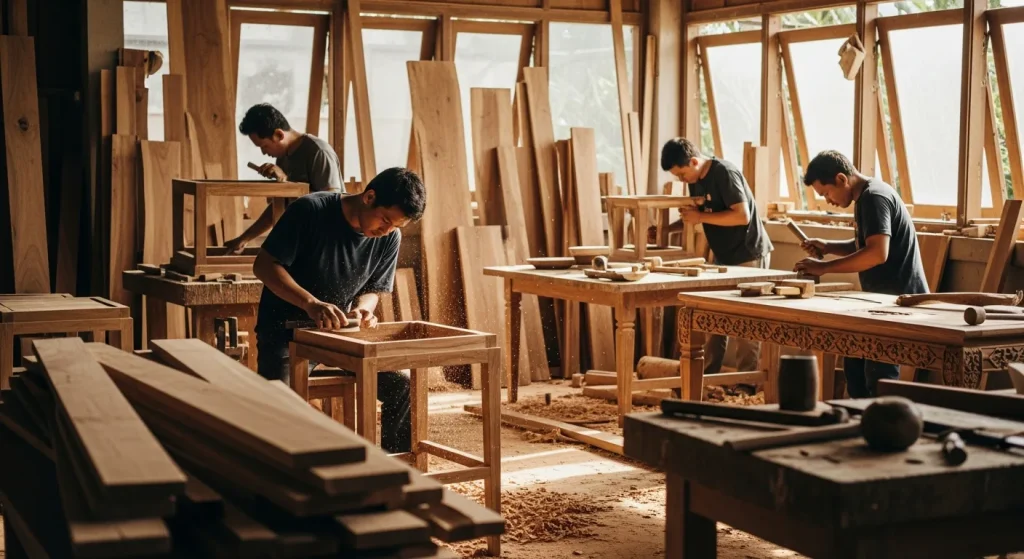
The teak furniture market relevant to Bali and Indonesia is experiencing steady mid-single-digit growth through 2027, driven by global demand for durable outdoor furniture and robust tourism and hospitality sector projects. Bali is a significant craft and export hub within Indonesia’s wooden furniture industry.
Comparison: Reclaimed Teak vs. New-Growth in Bali 2027: Which Truly Survives Tropical Humidity and Modern Minimalist Decor?
As a leading B2B exporter of teak furniture from Bali, we observe that trade buyers, importers, wholesalers, and interior contractors require precise information to make informed purchasing decisions. This article compares reclaimed teak with new-growth certified plantation teak, assessing their suitability for tropical humidity and modern minimalist aesthetics, with a specific focus on the Bali market through 2027.
Market Context: Teak Furniture in Bali, 2027
The global teak furniture market is valued between USD 3.8 and 8.5 billion, with a Compound Annual Growth Rate (CAGR) projected around 4–6% into the early 2030s. Asia-Pacific consistently leads this market in both production and consumption. Indonesia is recognised as a major global producer of teak, providing a strong supply base for furniture exports. Bali, specifically, serves as a significant craft and export hub within Indonesia’s broader wooden furniture industry. Furniture prices in Bali typically range from approximately USD 50–150 for smaller items to USD 500–2,000+ for premium sets, contingent on design complexity and certification.
Understanding Reclaimed Teak
Reclaimed teak is sourced from old structures such as disused buildings, bridges, and boats, primarily within Indonesia. This wood has often been exposed to elements for decades, undergoing a natural seasoning process. This extensive natural seasoning contributes to its stability and resistance to warping and cracking, particularly in humid environments. The unique grain patterns, nail holes, and variations in colour are characteristic features of reclaimed teak, telling a story of its previous life.
Properties of Reclaimed Teak for Tropical Climates
- Density and Oil Content: Reclaimed teak, typically harvested from mature trees, possesses high natural oil content and density. These properties render it naturally resistant to moisture, insects, and decay, making it highly suitable for tropical humidity.
- Stability: Decades of natural exposure and seasoning reduce the wood’s moisture content significantly, resulting in superior dimensional stability compared to younger wood. This minimises movement in fluctuating humidity.
- Durability: Its inherent strength and resistance to environmental factors ensure a long lifespan, even in challenging outdoor conditions typical of tropical regions.
Reclaimed Teak and Modern Minimalist Decor
The aesthetic of reclaimed teak, with its distressed finish, varied textures, and visible imperfections, introduces an organic, rustic element. While this can complement certain minimalist designs that embrace natural materials and textures, it may not align with the stark, unblemished lines often associated with ultra-modern minimalism. Designers seeking a warm, character-rich minimalist style often find reclaimed teak appropriate, valuing its sustainability narrative and unique visual depth.
Understanding New-Growth Certified Plantation Teak
New-growth teak is cultivated on government-managed or certified private plantations, primarily in Indonesia. These plantations adhere to sustainable forestry practices, ensuring a renewable resource. Certification, such as SVLK (Sistem Verifikasi Legalitas Kayu) in Indonesia, guarantees legal and sustainable sourcing, a critical factor for many international buyers. Trees are typically harvested at 20–30 years of age, offering a consistent supply of timber with predictable characteristics.
Properties of New-Growth Teak for Tropical Climates
- Density and Oil Content: While still possessing high density and oil content compared to many other wood species, new-growth teak generally exhibits slightly lower concentrations than older, reclaimed teak. This difference is due to the younger age of the trees at harvest. However, it remains highly resistant to moisture, rot, and pests, performing exceptionally well in tropical conditions.
- Stability: Modern kiln-drying processes applied to new-growth teak effectively reduce its moisture content, enhancing stability. While generally stable, proper drying is crucial to prevent issues in humid environments.
- Durability: New-growth certified plantation teak is highly durable and suitable for both indoor and outdoor use. Its consistent quality allows for predictable performance over time.
New-Growth Teak and Modern Minimalist Decor
New-growth teak offers a more uniform grain, consistent colour, and fewer natural imperfections. This allows for cleaner lines and smoother finishes, aligning well with the sleek, uncluttered aesthetic of modern minimalist decor. Its versatility means it can be finished to achieve various looks, from light, natural tones to darker stains, providing flexibility for designers aiming for a contemporary, refined appearance without sacrificing the inherent qualities of teak.
2027 Note: Certification and Supply Reliability
By 2027, the emphasis on certified plantation teak furniture from Bali is expected to be even stronger due to increasing global regulatory scrutiny and consumer demand for sustainably sourced materials. Indonesian SVLK certification will remain a critical benchmark for ensuring legality and environmental responsibility, making certified plantation teak a reliable and compliant option for international trade buyers.
Comparison Table: Reclaimed Teak vs. New-Growth Teak
| Feature | Reclaimed Teak | New-Growth Certified Plantation Teak |
|---|---|---|
| Source | Old structures (buildings, boats) | Sustainable plantations (20-30 year old trees) |
| Seasoning | Natural, decades-long exposure | Kiln-dried, controlled process |
| Appearance | Distressed, varied grain, imperfections, unique character | Uniform grain, consistent colour, fewer imperfections, cleaner lines |
| Stability (Humidity) | Superior due to extensive natural seasoning | Excellent, with proper kiln-drying |
| Oil Content | Very high (from mature trees) | High (from younger trees) |
| Sustainability | Resource reuse, circular economy | Renewable resource, certified sustainable forestry |
| Aesthetic Fit (Minimalist) | Rustic, character-rich minimalist | Sleek, contemporary minimalist |
| Certification | Often difficult to trace original source certification | SVLK certified (Indonesia), verifiable legal and sustainable sourcing |
| Price Range (Approx.) | Can be higher due to scarcity and processing | Consistent, market-driven pricing |
Conclusion: Which Truly Survives?
Both reclaimed teak and new-growth certified plantation teak demonstrate excellent survival capabilities in tropical humidity, a primary characteristic of teak wood. Their high natural oil content and density provide inherent resistance to moisture, insects, and decay. The choice between them largely depends on aesthetic preference, specific design requirements, and sustainability priorities.
- For projects requiring unique character, a rich patina, and a narrative of reuse, reclaimed teak offers charm and stability due to its natural seasoning. Its rustic appeal can enhance modern minimalist spaces that incorporate natural, textured elements.
- For designs demanding uniformity, consistent colour, and verifiable sustainable sourcing, new-growth certified plantation teak is the superior choice. Its clean aesthetic integrates seamlessly with contemporary minimalist decor, offering reliability and compliance with international sustainability standards.
Ultimately, both types of teak from Bali provide durable, high-quality furniture solutions for importers, wholesalers, retailers, and interior contractors operating in diverse climates and design contexts. Teak Furniture Bali is equipped to supply both, catering to the specific demands of your projects.
For further discussion on our teak furniture ranges and to understand how our products can meet your specific project requirements, request a wholesale quote on WhatsApp.